The Great Wildebeest Migration in Africa
Recognized as one of the largest land mammal migration in the world and one of the Seven Natural Wonders of Africa, the Great Wildebeest Migration is a true spectacle of nature, with millions of wildebeests, zebras and gazelles thundering across the endless plains of the Serengeti and Masai Mara throughout the year in search of fresh grazing and higher-quality water.
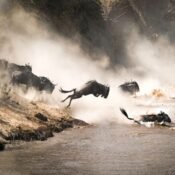
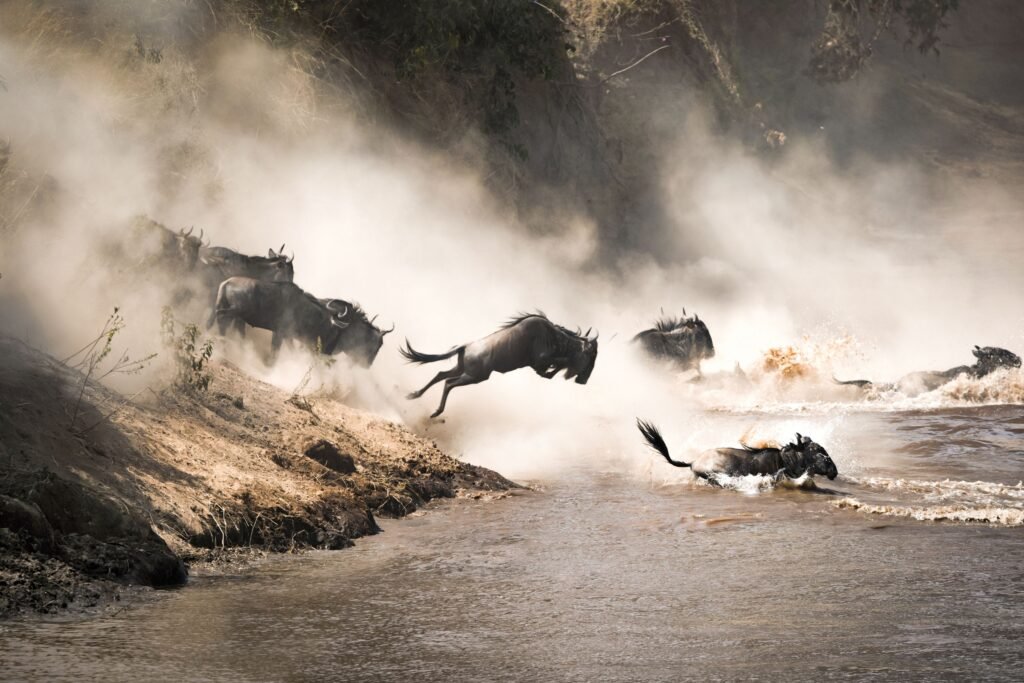
For many travelers, the epic crossing of the Grumeti and Mara River is the ultimate highlight of the Great Wildebeest Migration in Africa.
Undoubtedly, the Great Migration is an unforgettable experience and primarily one of the reasons tourists go to Kenya and Tanzania every year. If the Wildebeest Migration in Serengeti National Park or Masai Mara National Reserve in Kenya and on top of your to – see list, it is important to know where the herds are and when
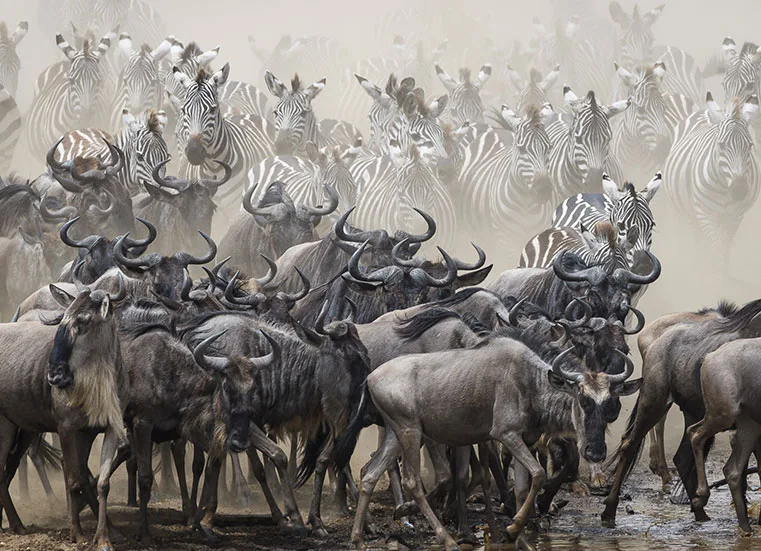
The Great Wildebeest Migration in Africa
In this article, we want to tell you
- When and where the Great Wildebeest Migration occurs
- The best time to watch the Migration
- The best place o see the migration
- Tips for the most intense Wildebeest Migration Experience
Quick Facts About The Great Wildebeest Migration
- The Great Wildebeest Migration is one of the largest land mammal migrations in the world, with almost two million animals cross the Mara River to make it to Masai Mara and back to Serengeti every year
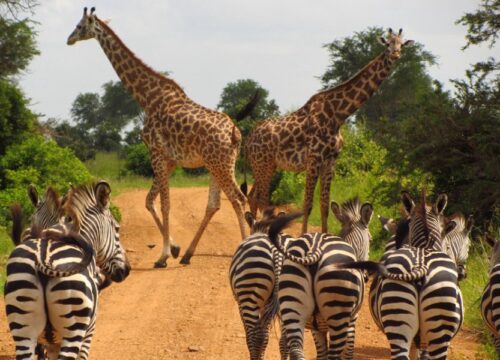
- Although named after wildebeests, which make the majority of the animals, the migrating herds also include topis, zebras, gazelles and other animals.
- The migration typically begins in December and lasts until November, although its beginning depends on the start of the rainy season in Tanzania.
- The herds cover approximately 1,000 kilometers during the migration cycle
- Up to 250,000 wildebeests are killed by predators during the migration
- Migrating wildebeests divided into herds of thousands of animals.
When and Where is the Great Wildebeest Migration
The exact timing for the Great Wildebeest Migration in Africa depends upon the rainfall patterns each year. This makes predicting where and when the migration begins, something not even wildebeests know.
Due to changes in climate, the rainy seasons have not been occurring regularly, nor are they easy to predicate. That is why the migration has been thrown out of synch in recent years.
However, thanks to your experienced guides, we are able to make a fairly accurate prediction and this is why our Tanzania Safaris are so popular for everyone who wants to see this spectacular with their own eyes.
A Month By Month Breakdown of the Great Wildebeest Migration in Africa.
December to April
The Great Wildebeest Migration typically begins in late November or early December, when migrating herds arrive in southern parts of Tanzania’s Serengeti National Park in the Ndutu area.
While in Serengeti, the animals are free to move wherever they want. It is a truly magnificent sight of almost two million wildebeests and zebras dispersed throughout Tanzania’s vast plains enjoying fresh and nutritious grasses.
In February, the calving season begins, with half a million calves born on the southern plains. Also, you can see a lot of predators at this time, who are waiting for easy prey.
Around April, the migrating herds head for the central and western part of the Serengeti in search of fresh, long grass. The rains start, and the mating season begins.
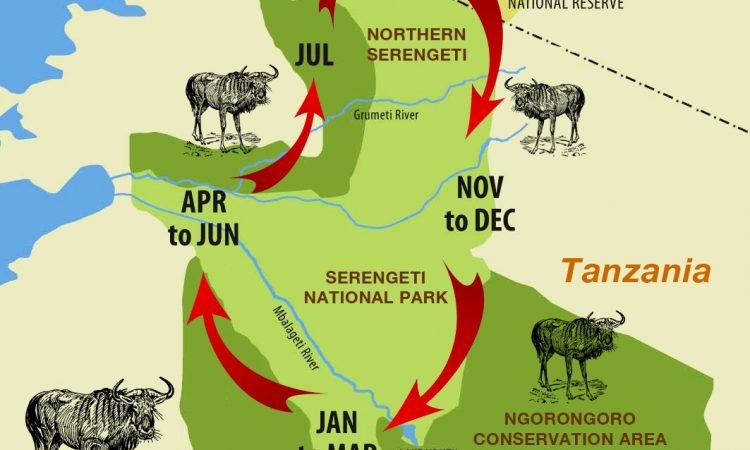
Map showing the Great Wildebeest Migration
May to June
In these months, the herds of wildebeests and zebras migrate further north to get ready for the dangerous Grumeti River Crossing full of ferrous giant crocodiles. It is a scary sight as you watch thousands of these magnificent creatures struggle against the forces of nature and predators. Unfortunately, not all animals survive the crossing.
The survivors continue their journey, with some herds heading through the Grumeti Game Reserve and Ikorongo Game Reserve while others choose the path piercing through the heart of the Serengeti National Park.
July to September
From July till September, the herds are found around the Mara River, which they need to cross to get to Kenya’s Masai Mara National Reserve. The sights are impressive as well as dramatic around this time. The fast –flowing water and Nile crocodiles make this crossing extremely dangerous for the herds.
The Mara River Crossing is the most serious obstacle during the Great Wildebeest Migration, creating a spectacle yet often nerve wrecking moment filled with panic and confusion as herds try to get through the gushing river.
Interestingly, in the last three years, almost two-thirds of the migration did not cross the Mara River since there was enough fresh grass in the northern Serengeti.
October to December
From October till November, the wildebeest migration leaves the northern Serengeti and makes its way back to the southern part /Ndutu via the Central Seronera Region. The herds remain there till late November / early December, and the annual cycle starts all over again.
When is the Best time to see the Great Wildebeest Migration?
It is very hard to say what the best time to witness the Great Wildebeest Migration is, as it all depends on what you would like witness. Also, given how unpredictable the rain seasons have become, pinpointing the exact date is mighty difficult.
Generally, we can divide the migration into five events/seasons
| Approximate Period | Event | Place |
| December to January | Beginning of the migration | Southern Serengeti |
| February to April | Calving & breeding season | Southern Serengeti |
| May to June | Grumeti River crossing | Western Serengeti |
| July to September | Mara River crossing | Masai Mara and Northern Serengeti |
| October to November | The trek south | Masai Mara and Northern Serengeti to Southern Serengeti |
In conclusion: Most travelers wanting to see the Great Migration plan their safari between July and September. That is mostly because of the Mara River Crossing, which is by far the most exciting and spectacular event of the Great Wildebeest Migration.
How to Experience the Great Wildebeest Migration?
Witnessing the Great Wildebeest Migration is a magical experience. However to fully enjoy it, you need to travel to Kenya and Tanzania with a trusted and experienced safari guide, which is something a Ratel Safaris can help you with.
Each of our Great Wildebeest Migration safaris offers a unique experience that you can fully customize to your preferences.
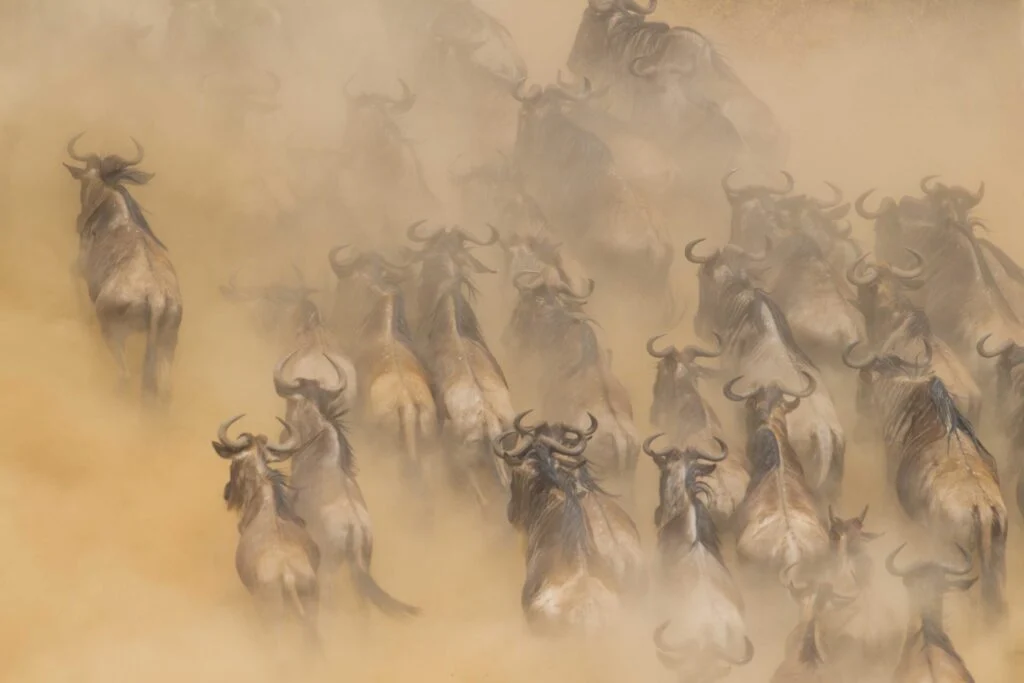
Migrating herds on their annual journey
How to Plan the Great Wildebeest Migration Safari?
Since now you know when, where and with whom to experience the Great Wildebeest Migration. The only remaining question is how.
With no lie, planning a wildebeest migration safari can take some time, and it is not something that you should treat trivially. While we can make this adventure even more magical once you are here, there are still several things you should do before you leave for Africa.
Here are some tips on how to plan the Wildebeest Migration Safari.
-
Book Early
Planning and booking a wildebeest migration safari or any other safari is not something that you should do on short notice. This rule applies to any safari offer, but is especially important during the peak wildebeest migration season from June to October.
This is when most tourists flock Tanzania and Kenya to witness the migration, meaning that camps and lodges fill up fast. Therefore, if you want see the river crossings, be sure to book your trip early, at least a year in advance.
-
Know When to Go
As already state, there is no shortage of tourists in Tanzania and Masai Mara during the peak season, especially in the Serengeti National Park and Masai Mara where most of the migration occurs. If you would like to avoid the crowds, it might be better to consider another time of the year to experience the migration on your own terms, without the hordes of tourists fighting for the best spots.
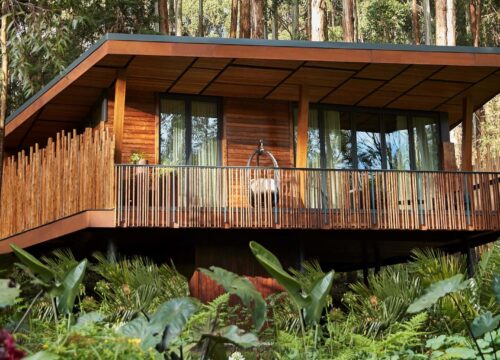
One of the advantages of booking your migration safari through Ratel Safari is that our accommodations are located a bit further away from the hot spots, allowing you to enjoy your safari in a more tranquil environment and to fully immerse yourself in the experience.
-
Diversify Your Experience
Although witnessing the Great Wildebeest Migration is amazing on its own, there are multiple ways to intensify your safari experience. At Ratel Safaris, each safari we offer comes with a list of additional activities you can book to make your trip even more personal.
Conclusion
As one of the “Seven Natural Wonders of Africa”, the Great Wildebeest Migration is not something to avoid when planning your trip to Africa to witness the Great Wildebeest Migration. It is a once-in-a-lifetime experience that will be with you forever, and a spectacle that doesn’t disappoint.
When looking for a Great Migration Safari, look no further than Ratel Safaris. We have years of experience organizing tours and safari throughout Kenya and Tanzania, providing our clients with everything East Africa has to offer.