Serengeti National Park
Best known for the iconic Great Migration

The Wildebeest Migration in Serengeti, Tanzania
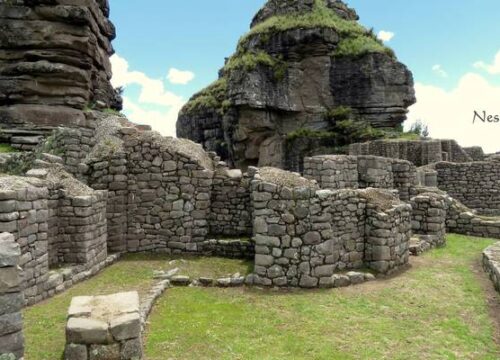
The iconic Serengeti National Park is one of the most famous safari destination in Africa if not the world. Spanning an area of 30,000 square kilometers in northern Tanzania, Serengeti is a local Maasai language word meaning “endless plains”, a very appropriate name for this classic Africa safari destination as most of the park consists of vast, open plains occasionally broken by rocky outcrops (Kopjes).
Hosting the annual Great Wildebeest Migration – one of the Natural World Wonders and the Big Five (lion, leopard, cape buffalo, rhino and elephant). Serengeti National Park is arguably one of the most famous national parks in the world. The Great Wildebeest Migration also known as “The Great Migration” is an awe-inspiring phenomenon with approximately 2 million wildebeests, over 200,000 zebras and 250,000 Thomson’s gazelles embarking on annual journey in search for water and green pasture in the Serengeti – Mara Ecosystem.
Serengeti National Park is divided into 3 sections that is the popular southern/central park (Seronera Valley), which is called the “serengit”, the land of the endless plains. It is classic savannah dotted with acacias and filled with wildlife. The western corridor is marked by the Grumeti River, and has more forests and dense bush. The north, Lobo area, meets up with Masai Mara National Reserve in Kenya, it is the least visited section of Serengeti.
The Serengeti ecosystem is one of the oldest on earth. The essential features of climate, vegetation and fauna have barely changed in the past million years. Early man himself made an appearance in Olduvai Gorge about two million years ago. Some patterns of life, death, adaptation and migration are as old as the hill themselves.

Cheetahs in Serengeti
Wildlife in Serengeti National Park
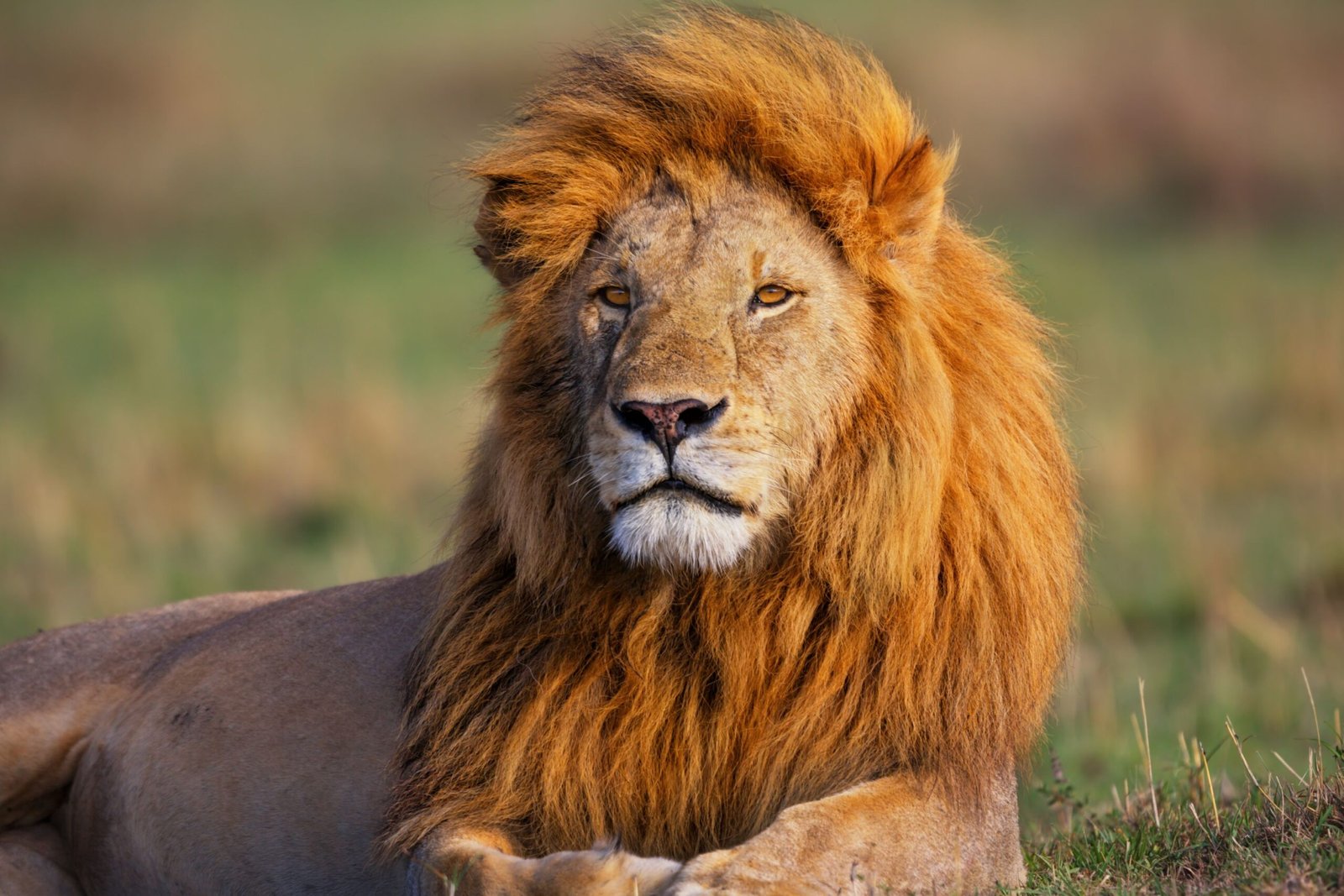
Serengeti National Park hosts one of the highest concentrations of large mammals on earth, and resident wildlife is present year – round regardless of where the migration is. The park is home to all the members of the Big Five – lion, leopard, elephant, buffalo and rhinos, though the numbers of black rhinos are critically low at around 31 individuals and sightings are rare.
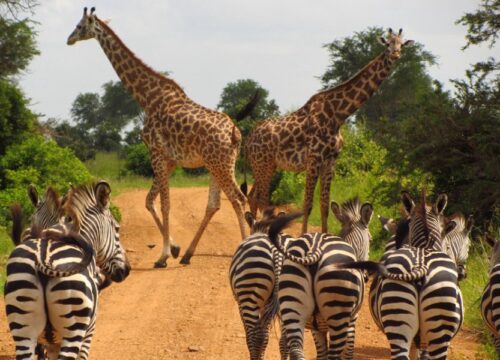
The Serengeti supports an estimated 3,000 lions, making it the largest lion populations in Africa, along with roughly 1,000 leopards and 5,000 elephants. Other wildlife species in Serengeti National Park include wildebeests, gazelles, hippos, zebras, cheetahs, giraffes, hartebeests, African wild dogs and spotted hyenas among others.
Birdlife in Serengeti National Park
Serengeti National Park is home to abundant bird life with over 500 bird species recorded thriving in the different park habitats including Black-headed gonolek, Fischer’s lovebird, Green-backed woodpecker, Grey-backed fiscal, Grey-breasted spurfowl, Grey-crested helmet-shrike, Hildebrandt’s starling, Red-capped robin-chat, Rufous-tailed weaver, Rüppell’s vulture, Schalow’s turaco, Silverbird, Southern ground hornbill, Usambiro barbet, Verreaux’s eagle, Yellow-throated sandgrouse among others.
The Great Wildebeest Migration in Serengeti
The annual wildebeests is probably the Serengeti’s main attraction, witness over 2 million wildebeests accompanied by thousands of zebras and gazelles is a truly impressive sight to see as they thunder across the Serengeti plains, crossing rivers in search of water and fresh grass. Mega hers on the move stretch up to 40 kilometers long, covering a distance of some 1000 kilometers.
The journey is dangerous for the wildebeests, zebras and gazelles who need to constantly outsmart their predators. Especially at the Mara and Grumeti River where giant crocodiles and fast flowing water awaits.
The Great Wildebeest Migration is listed as one of the Seven Natural Wonders of the World and for lots of visitors it is the highlight of their Serengeti Safari Journey. It is definitely one of the world’s largest wildlife spectacles. Since the animals migrate in a circle between the Serengeti and Masai Mara in Kenya, you can witness the Great Wildebeest Migration anytime of the year. The exact timing of the Serengeti Wildebeest Migration depends on the rainfall patterns each year, and thanks to our experienced Ratel Safaris Guides, we are able to make a fairly accurate prediction.
Serengeti Balloon Safari
What to do in Serengeti National Park
Game Drives
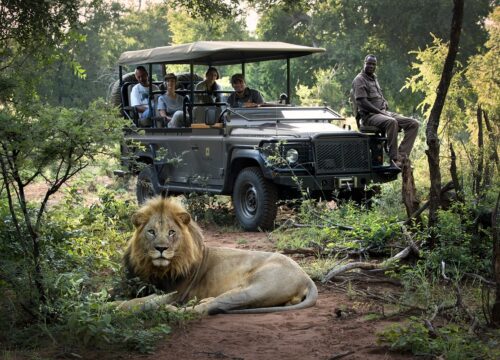
Game viewing is the highlight of any Serengeti Safari and are offered as morning and afternoon or full day game drives, permitted between 06:00 and 18:00 daily. Game drives in Serengeti are done in 4×4 WD land cruisers with open roof and windows for unparalleled views of the animals.
Animals to lookout for on game drives in Serengeti National Park including lions, leopards, cape buffaloes, wildebeests, hartebeests, giraffes, cheetahs, Wild dogs, spotted hyenas among others.
Note: Night game drives are not permitted within Serengeti National Park, though they are offered in the conservations around the park.
Hot Air Balloon Safaris
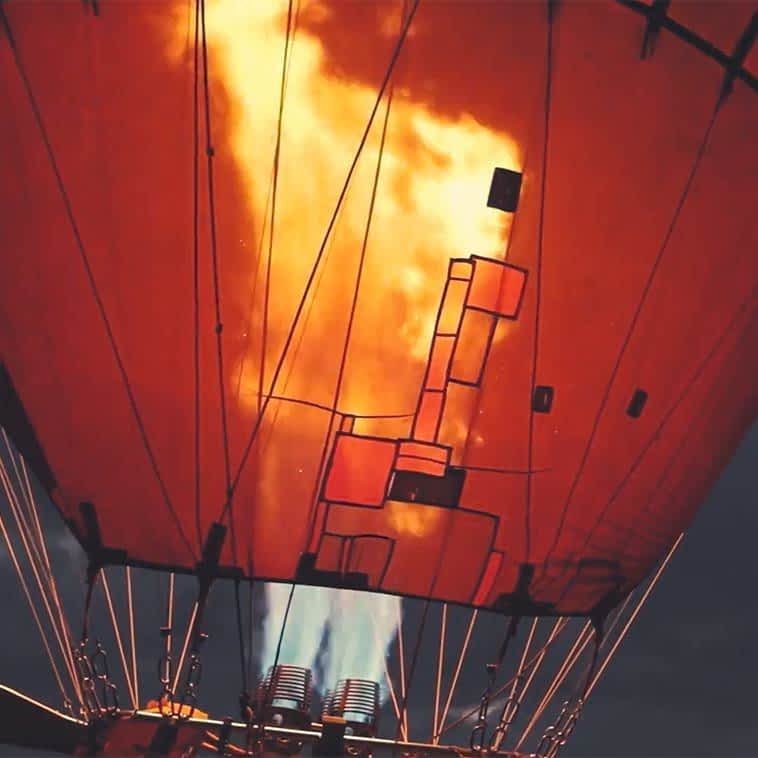
Soar above the sky and enjoy a bird’s eye view of the open endless plains of Serengeti National Park. Balloon flights launch at dawn, typically at 06:00, and take approximately1 hour of flying above the savannah plains.
As you glide above the savannah, you will enjoy amazing views of the rolling landscape, and aerial views of the animals such as large prides of lions, herds of elephants and buffaloes, gazelles, zebras and herds of wildebeests. This experience starts early in the morning with a transfer from your safari lodge at around 4 am, heading to the launch site. After the briefing, you soar in the sky as the sunrises. Watch as the sun casts its first rays on the savannah plains, the experience ends with a champagne breakfast served under an acacia tree, celebrating the successful experience.
Birding
With over 500 recorded bird species, Serengeti National Park a paradise for birth enthusiasts and on a Tanzania birding safari you will spot several bird species including Black-headed gonolek, Fischer’s lovebird, Green-backed woodpecker, Grey-backed fiscal, Grey-breasted spurfowl, Grey-crested helmet-shrike, Hildebrandt’s starling, Red-capped robin-chat, Rufous-tailed weaver, Rüppell’s vulture, Schalow’s turaco, Silverbird, Southern ground hornbill, Usambiro barbet, Verreaux’s eagle, Yellow-throated sandgrouse among others.
Birding in Serengeti is good year-round, however it is at its very best from November to April when Palearctic and intra – African migratory birds are present. Also, this is a nesting time for resident species and some birds can be spotted in their breeding plumage.
Where to stay in Serengeti National Park
There is a wide range of accommodation options in Serengeti National Park ranging from budget, midrange to luxury found inside and outside of the park. Our best picks include
- Lemala Nanyukie Lodge
- Singita Sasakwa Lodge
- Asilia Sayari Camp
- Singita Serengeti House
- andBeyond Serengeti Under Canvas
- Lemala Kuria Hills
- Singita Faru Faru
- andBeyond Grumeti Serengeti River Lodge
- Singita Sabora Tented Camp
- Serengeti Bushtops
- Singita Mara Tented Camp
- Legendary Expeditions Songa Migrational Camp
- Grumeti, Singita Grumeti among others.
Getting to Serengeti National Park
Most safaris to Serengeti National Park start from Arusha City in Northern Tanzania that serves as the hub for the Northern Safari Circuit. Most international visitors arrive at Kilimanjaro International Airport (KIA), located approximately 50 kilometers from Arusha. From here, you can get to Serengeti National Park either by road or air.
By Road: From Arusha to the main entrances of Serengeti National Park is approximately 275 kilometers depending on the route, and the drive is approximately 6 to 7 hours. The route via Ngorongoro Conservation Area is paved for most of the distances.
By Air: Domestic and chartered flights are available from Arusha Airport to several airstrips serving Serengeti National Park. The flight is only one hour and they are offered by Regional Air, Air Excel, Auric Air and Coastal Aviation with morning and afternoon departures.
Best Time to visit Serengeti National Park
Serengeti National Park experiences subtropical climate with rain season from November to April and dry season from May to October. The park is located at an altitude between 1,100 and 2,000 meters with annual average rainfall from 900 to 1,000 mm.
Serengeti is a year – round safari destination, however the peak, wet season runs from March to April. June to October are the best months to visit Serengeti to see the wildebeest in the western corridor and August to September in the northern parts of the Serengeti. During this time of year, the weather is generally sunning with not much rain.
Please Note: The dry season is one of the busier times to visit Serengeti National Park.