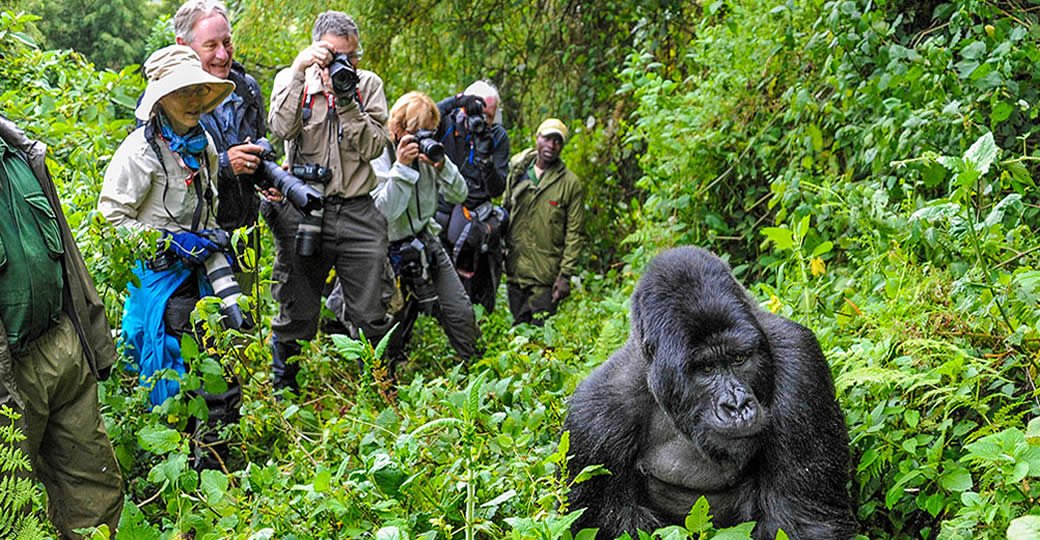
Set out in search for mountain gorillas in the misty forests of Rwanda
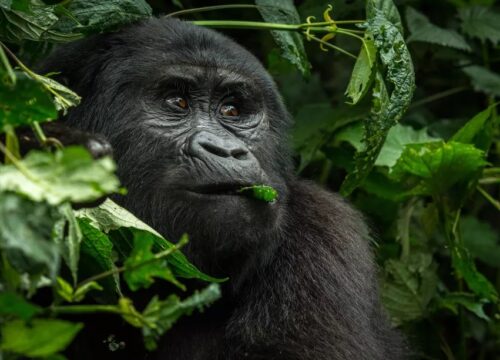
Gorilla trekking in Rwanda as well as Uganda was introduced as a form of sustainable wildlife tourism purposely to support the conservation of the then critically endangered primates. Following its introduction, the population of mountain gorillass (both in Bwindi Impenetrable National Park and Virunga Massif) have seen significant growth in number. Gorilla tourism remains an important foundation for much of the conservation and community development in both areas.
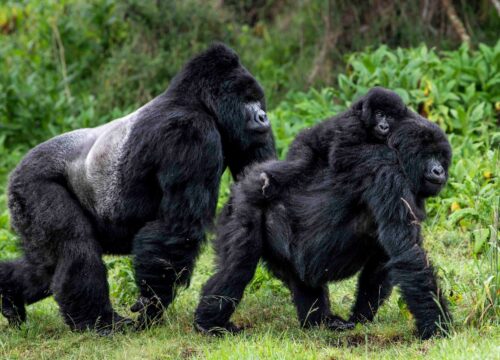
With the continued efforts to protect mountain gorillas, they are not recognized as “endangered”. In Rwanda, only 96 trekking permits are issued daily, allowing groups of 8 to visit the 12 different habituated gorilla families in Volcanoes National Park. Mountain gorillas in Rwanda inhabit the slopes of Virunga Volcanoes and thrive in more open bush compared to their Ugandan counterparts, which are much more difficult to reach on a gorilla trek.
The gorilla trekking permits in Rwanda cos UDS$ 1,500 per person per trek.
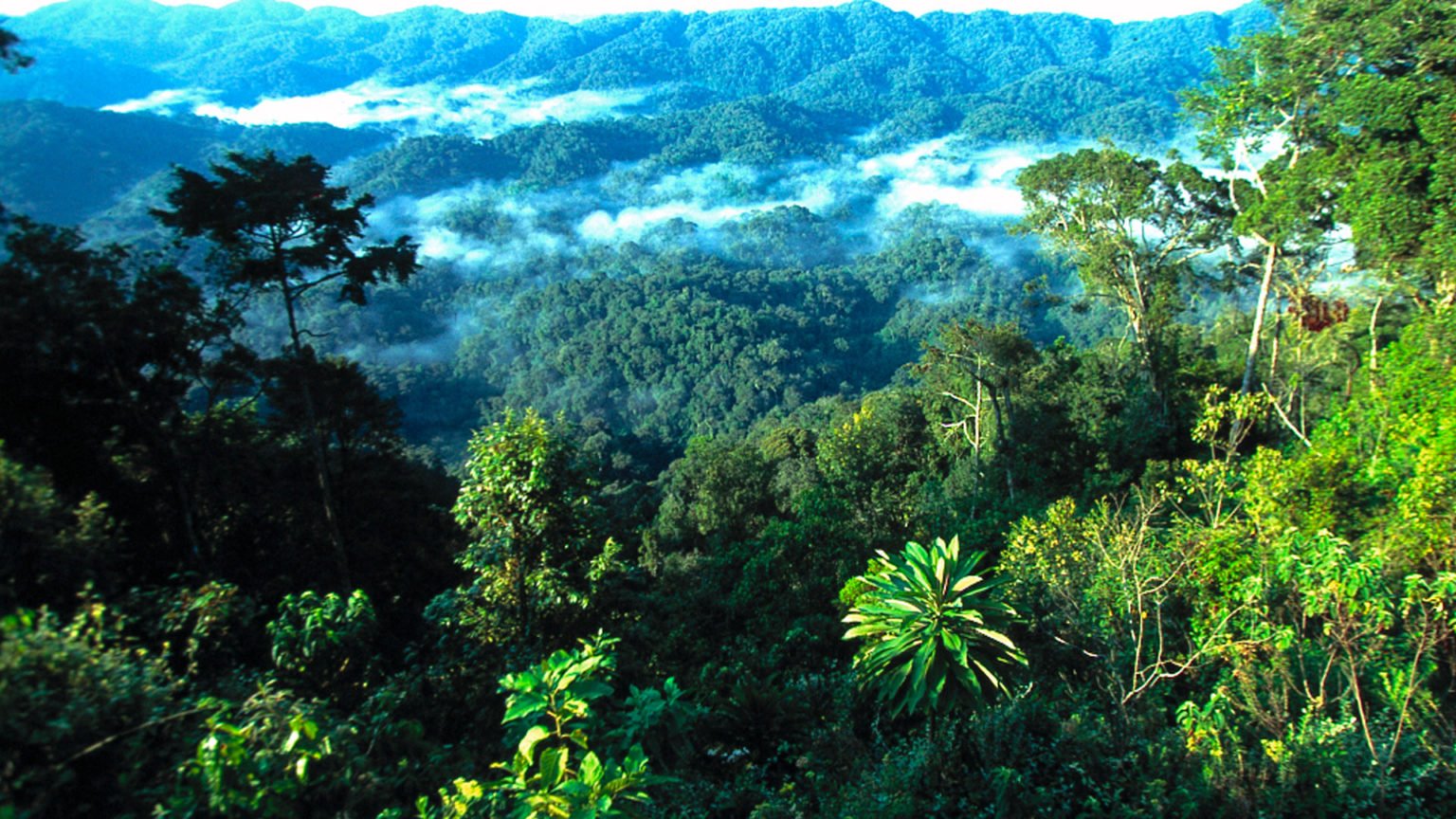
The misty covered forests of Volcanoes National Park
What to Wear
Regardless of whether you travel in the dry season or wet season in Rwanda, it is crucial to pack for all weather conditions, as they can change rapidly in the forest. Prior to travel, check with your hotel or lodge to see if they provide any complimentary trekking gear, to lessen your packing load.
Below is a list of items to carry for your gorilla trekking in Rwanda.
- A small lightweight, frameless, waterproof back/day pack for personal items, cameras, jackets, layers, etc
- Waterproof hiking boots or shoes with treaded sole – high ankle preferred
- Hiking socks (wool or polyester) and long enough to tuck your pants into.
- For photographing the gorillas, bring cameras with high speed film or inform yourself on how to alter the speed settings on your equipment (no flash photograpy is allowed while with the gorillas).
- Heavy canvas and gloves
- Waterproof or moisture wicking pants – lightweight, but thick enough to avoid stinging nettles or thorny branches
- Hat for sun protection and coverage from branches
- Walking stick,, re-usable water bottle and packed lunches (will be provided)
What to Expect
Before you trek into the forest, you will meet at the Volcanoes National Park Headquarters for a safety briefing and to meet your group and guides. Your guide will then lead you to the spot where the gorilla family was last seen the previous day. All tracker guide are experienced in looking for signs of the gorillas’ location, for example, footprints, dung, chewed bamboo stalks, as well as abandoned nests. Gorillas soil their nests and then abandon them to build new ones each night, and trackers are able to tell the age of the nests, as well as which group made them (though this can be more difficult on rainy days).
While hiking to your designated gorilla family, guides will generally allow time to stop and rest along the trail. They tend to hike a steady pace throughout the excursion, or they must be mindful of the time to ensure that you will be able to reach the gorillas, spend a full hour with them, and make it back down the trail in a timely manner.
The hour time frame is set to avoid causing the animals any undue stress or getting them overly used to human interactions. For guests with physical limitations or disabilities, there is the option to have porters safely carry guests for the durations of the hike using specialized equipment. Guests will need to inform their tour leader if they require these services ahead of time, to ensure all necessary equipment is onsite for your trek. if for some reason you are unable to complete your excursion to the gorillas, you will either be able to return immediately to the base of the trail with a porter, or you will be asked to remain where you are with a porter until the group returns.
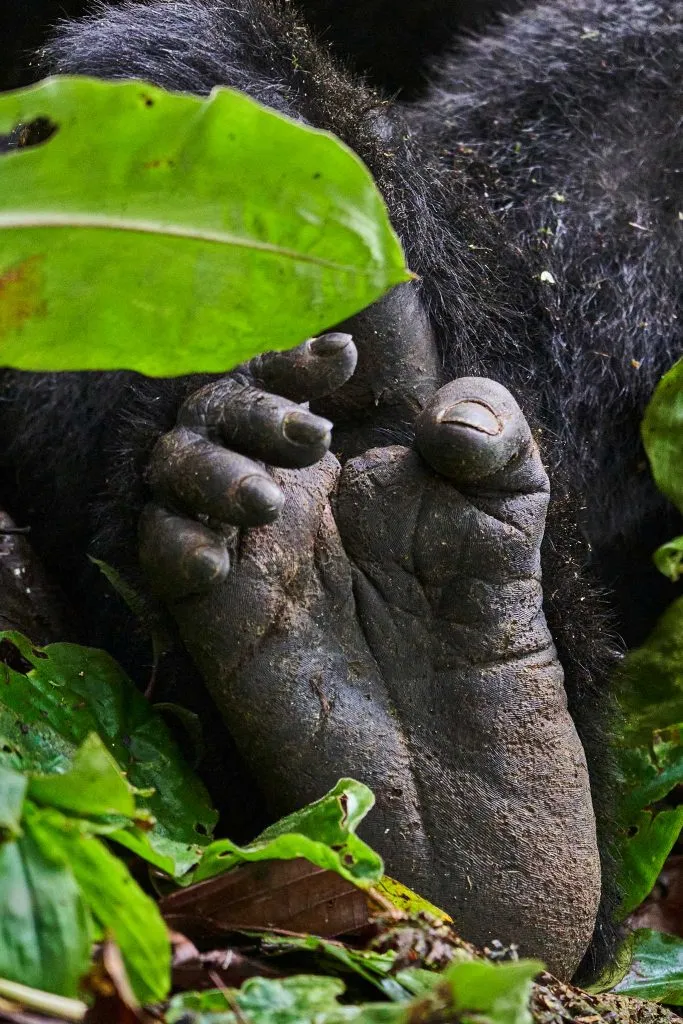
Feet of a Gorilla
Reaching the Gorillas
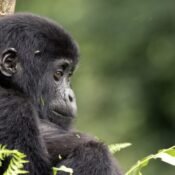
It is common to smell the mountain gorillas before reaching them, and for your guides and trackers to make soft grunting noises to assure the group that friends are approaching (the gorillas’ vocalizations are used as reassurance for the other family members). It is most likely that you will view the gorillas during their midday lounging period. During this time, the dominant silverback lounges on trees, while youngsters roll around in the vegetation, and females nurse and play with their infants.
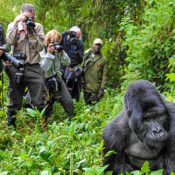
Once you reach the gorilla family, everyone will crouch down while observing, so that the dominant male gorilla can see you at all times. Also, ensures that you don’t pose a threat to, or overwhelm the gorillas, it cannot be stressed enough the touching gorillas at any point is strictly forbidden, even if one approaches your group.
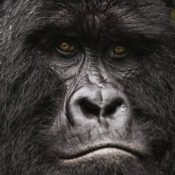
Additionally, a traveler must never stare directly into the eyes of a gorilla, as this is viewed aggressively. Looking sideways and maintaining a subservient stance is key, especially if a gorilla comes charging (often a release of tension or display for the rest of the group).
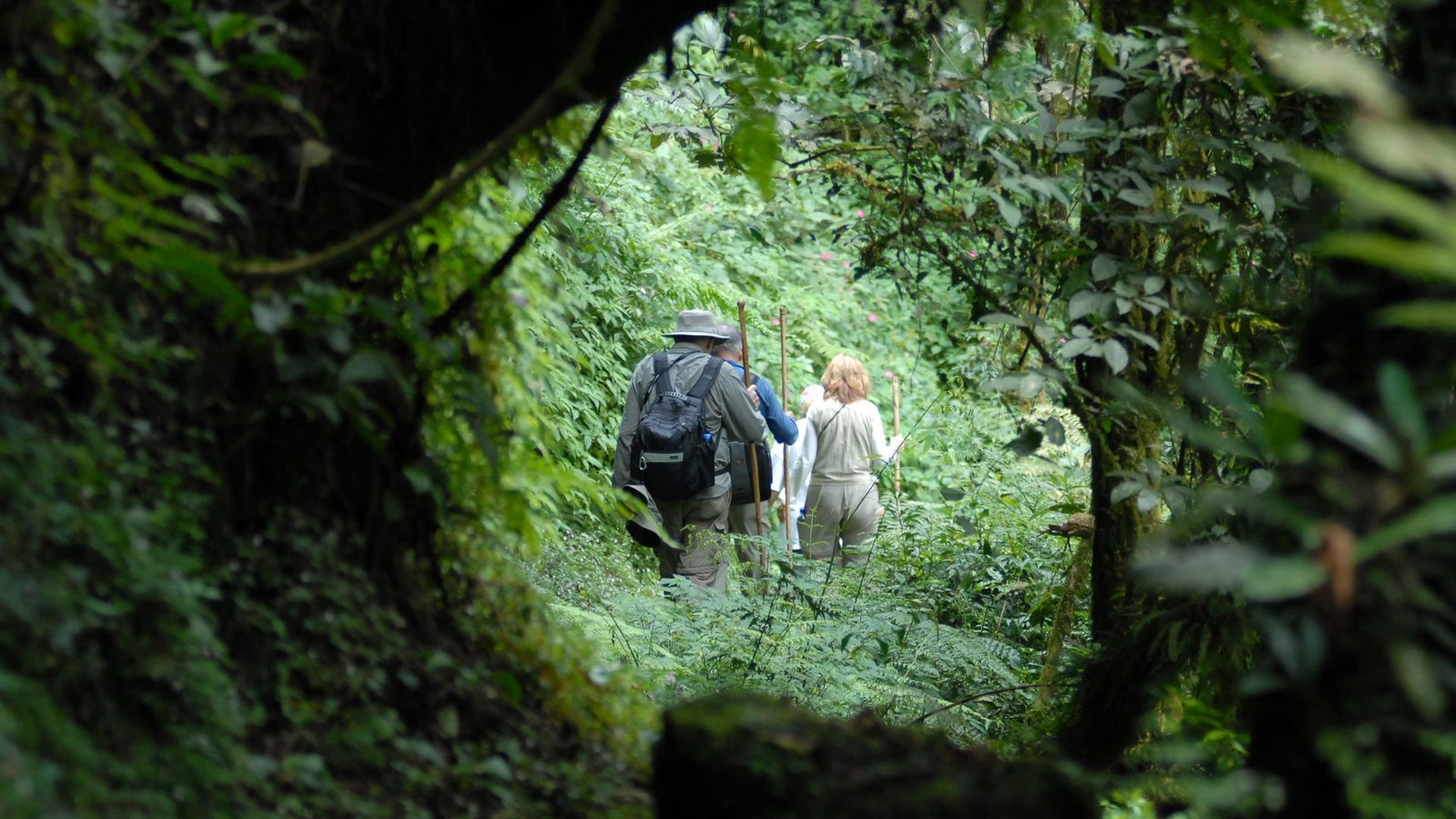
Hiking through Volcanoes National Park in search for mountain gorillas
Porters and Tipping Guidelines
For Porters
Though it is not compulsory, hiring a porter for your gorilla trekking is very vital as they offer valuable assistance during the gorilla trek and the fee paid to them provides an important stream of income to communities living around the park.
The recommend payment for a porter is $20-$50 per traveler per trek. Some of the porters in Volcanoes National Park were former poachers, and this payment serves as their wages and an incentive teaching the locals that they can earn more by protecting the gorillas than they can if poaching them.
The importance of the porter is not only to carry the bag, they only help you when navigating the steep slopes.
Gorilla Trekking Guides
Each gorilla trek includes 1 guide, 2 -3 trackers and security personnel per group of trekkers. These individuals do earn salaries, however we recommend a tip of $25 per trek per traveler. This may be given to the guide in view of the trackers once out of the park such as that he can distribute amongst the trackers and himself. As a reward for the good guiding service, a tip of $7 – 15 per traveler is appropriate for a park employed guide.
For guest relations officer – $5 – 10 per person per meeting depending on group size.
Driver Guides
A tip of $5 per traveler per day for larger groups and $10 per traveler per day for singles and couples. Tips may be given in Rwanda Francs or US Dollars (other currencies such as Euros and Sterling are much less welcome), with Rwanda Francs being the preferred option. Please note that if you are tipping in US Dollars, only notes issued in or after the year of 2006 are accepted in Rwanda. Also, notes smaller than USD 50 attract a far low exchange rate, especially outside Kigali.
Travelers’ checks are not accepted in Rwanda.
Other
- Transfer Driver in Kigali: US$ 5-10 per traveler depending on group size (if someone other than dedicated guide)
- Lodge and camp staff: $ 10 per traveler per day
- Hotel Staff (Waiter): 10 – 15% service charge per meal, irrespective of group size, and if not already included in the bill.
In conclusion: Gorilla trekking in Rwanda is a remarkable experience, and even more so if travelers heed all rules, regulations, a guidelines in advance. This ways, travelers can experience firsthand the exhilaration and emotion of one of the most exhilarating